
The Most Effective Climate Protection Starts Where Few People Look – In the Soil
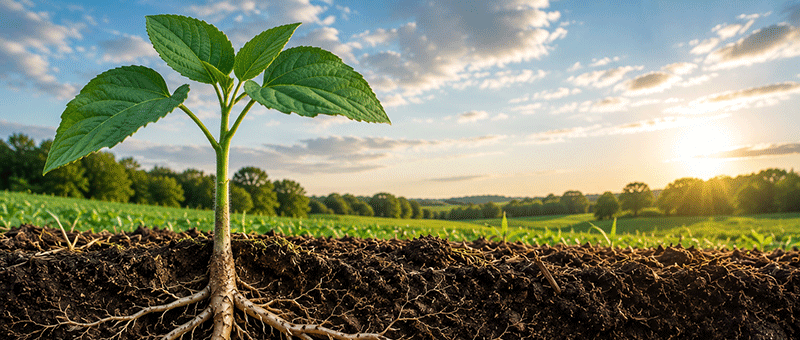
Climate Protection Through Humic Substances – Why Healthy Soils Are the Key to Our Future
Climate change is one of the greatest challenges of our time. While discussions often focus on renewable energy, electric mobility, or reducing CO₂ emissions, one of nature’s most powerful climate protectors often goes unnoticed: the soil. More specifically, humic substances play a crucial role in climate protection, soil fertility, and sustainable agriculture.
What Are Humic Substances?
Humic substances are naturally formed during the decomposition of plant and animal residues. They are a major component of humus and help soils remain fertile, biologically active, and resilient.
Their importance, however, extends far beyond agriculture. Humic substances act as natural carbon reservoirs and make a valuable contribution to climate protection.
Humic Substances Store Carbon
As plants grow, they absorb carbon dioxide (CO₂) from the atmosphere. Part of this carbon enters the soil through plant roots and decomposing plant material.
This is where humic substances come into play. They stabilize carbon and store it in the soil over long periods of time, preventing it from being released back into the atmosphere as CO₂.
The result:
- Less CO₂ in the atmosphere
- Reduced greenhouse gas impact
- Long-term carbon sequestration
Every increase in soil humus therefore represents an active contribution to climate protection.
Healthy Soils Protect Our Climate
Humus-rich soils offer far more than carbon storage. They improve numerous soil properties, including:
- Increased water retention capacity
- Improved nutrient availability
- Reduced soil erosion
- Greater resilience to drought and heavy rainfall
- Enhanced biological activity in the soil
As extreme weather events become more frequent, healthy soils are increasingly important as a natural safeguard for agriculture and the environment.
Greater Biodiversity Through Living Soils
Healthy soil is full of life. Billions of microorganisms, fungi, and soil-dwelling organisms work every day to decompose organic matter and make nutrients available to plants.
Humic substances create ideal conditions for this soil ecosystem. As a result, stable ecosystems develop that strengthen plant resilience and support biodiversity over the long term.
Sustainable Agriculture Begins in the Soil
Humus-rich farming systems offer numerous benefits:
- Reduced dependence on mineral fertilizers
- More efficient water use
- Higher yields, even during dry periods
- Long-term soil fertility
- Lower CO₂ emissions
Healthy soils benefit farmers, the environment, and society alike.
How Can Humus Be Built Up?
The development of soil humus can be supported through a variety of practices:
- Applying compost and organic fertilizers
- Growing cover crops
- Using diverse crop rotations
- Minimizing soil disturbance
- Leaving plant residues on the field
- Preserving permanent grasslands
- Promoting agroforestry systems
These measures strengthen natural soil processes and increase humus content over time.
Humic Substances – Small Components with a Big Impact
Humic substances clearly demonstrate that climate protection does not begin solely in the atmosphere, but directly beneath our feet. Every healthy soil stores carbon, helps plants withstand drought stress, improves water availability, and promotes biodiversity.
Investing in humus building is therefore an investment in our future.
Conclusion
Soil is far more than a medium for plant growth—it is a powerful natural ally in the fight against climate change. Humic substances help store carbon over the long term, improve soil resilience, and support sustainable agricultural practices.
By promoting humus formation, farmers and land managers not only protect productivity and crop yields but also make an important contribution to climate protection. Healthy soils lead to healthy plants, a stable environment, and a sustainable future for generations to come.